Buying a mountain or rural home in Nelson County can be exciting, but it also comes with a different inspection checklist than a typical in-town purchase. If you are looking at a cabin, acreage, or home with a private road, well, or septic system, small details can have a big impact on how the property functions over time. This guide will walk you through the inspection issues that matter most in Nelson County so you can ask better questions, budget more wisely, and move forward with confidence. Let’s dive in.
Why Nelson County inspections need a closer look
Nelson County says most of its land is mountainous or hilly, with development often following stream valleys and roadways. That matters because slopes, drainage, and access can affect everything from erosion risk to septic performance.
In a rural setting, a standard home inspection is only part of the picture. You may also need to evaluate private well service, septic systems, road maintenance, floodplain location, and how water moves across the site.
Start with the land itself
Before you focus on the house, look at the property as a whole. In Nelson County, the land can tell you a lot about future maintenance, repair risk, and usability.
County guidance warns that clearing, grading, building, cropping, and overgrazing on steep slopes can increase erosion, landslides, stormwater runoff, and the distance septic effluent must travel if a system fails. The county also advises avoiding septic systems on slopes of 20 percent or greater, following natural topography, and preserving natural drainage channels.
Key site conditions to review
When you tour a mountain or rural property, pay close attention to:
- Slope steepness around the house and septic area
- Signs of runoff, erosion, or washed-out soil
- Natural drainage channels and whether they appear blocked or altered
- Low spots where water may collect
- Whether the parcel appears to sit in or near flood-prone land
Nelson County GIS and zoning tools can help you screen a parcel early, including whether it may be affected by floodplain regulations. Still, maps do not replace an on-site review of slopes, runoff, culverts, and grading.
Drainage matters more than many buyers expect
Water is one of the biggest long-term threats to a mountain home. When drainage is poor, moisture can affect the foundation, crawl space, lower walls, and even indoor air quality.
Guidance cited in the research recommends grading the ground away from the home at roughly one-half inch to one inch per linear foot. It also recommends extending downspouts away from the foundation and testing underground drains.
Drainage red flags to watch for
A home may need closer review if you notice:
- Standing water near the foundation
- Damp crawl spaces or musty odors
- Mold or mildew staining
- Rotting trim, decking, or lower siding
- Downspouts that empty too close to the house
- Washed gravel, exposed roots, or soil channels after rain
In Nelson County, drainage concerns often connect back to the slope of the lot. A home can look fine on a dry day and still have serious runoff issues during heavy rain.
Well and water testing in Nelson County
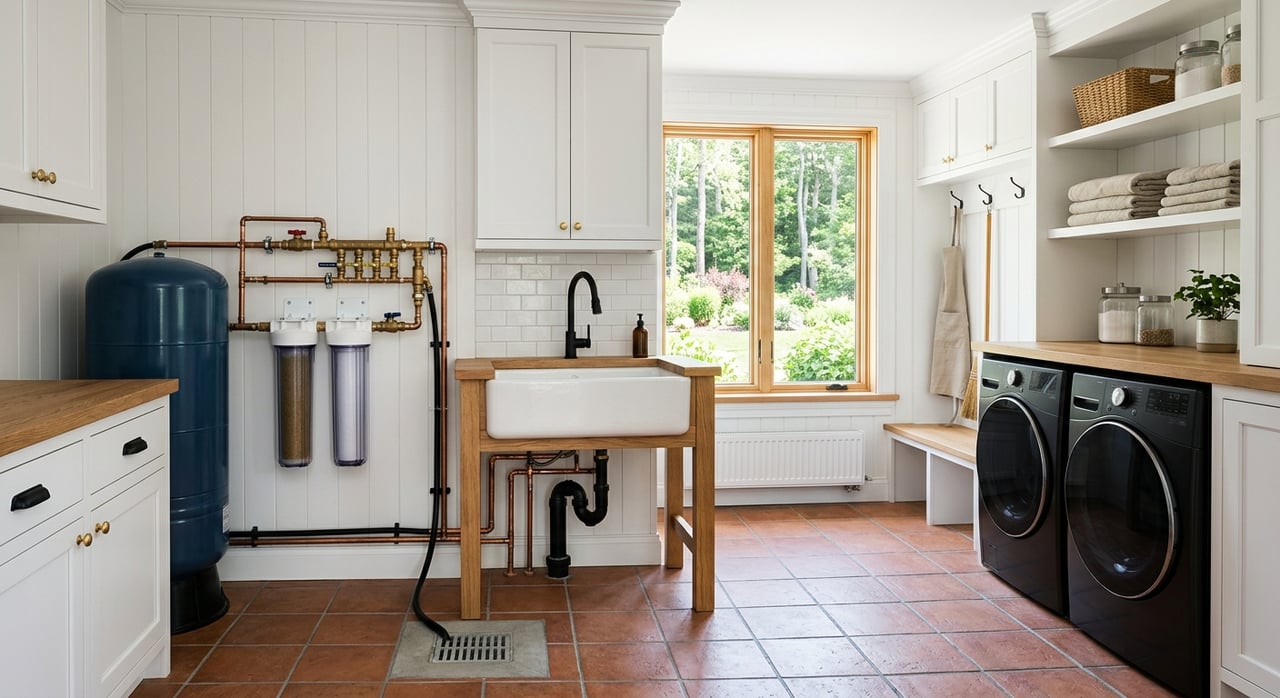
Many rural properties in Nelson County rely on private wells. That changes your due diligence because Virginia does not require a well inspection or well-water testing as part of a property transfer.
That said, the Virginia Department of Health says prospective buyers should test private wells anyway. Lenders or local governments may also require testing or inspection in some cases.
What buyers should know about well testing
VDH recommends a baseline set of tests, along with bacteriological and radiological checks. It also says bacteria and nitrate should be tested annually, and additional testing makes sense if the wellhead floods or if the water changes in taste, odor, or appearance.
If you want a more complete picture of water quality, it is smart to think beyond the minimum a lender may ask for. For a stand-alone well inspection, VDH recommends using a licensed water well service provider.
Local office for well and septic questions
In Nelson County, private well and septic permitting and inspections are handled through the Blue Ridge Health District. The Nelson County Health Department environmental health office is located in Arrington at 1645 Thomas Nelson Highway, and the environmental health phone number is 434-263-4297.
Septic inspections have limits
If a property has a private septic system, do not assume a basic check gives you a complete answer. Virginia law allows only certain licensed professionals to perform a real-estate septic inspection, including licensed onsite sewage system operators, installers, or soil evaluators.
The inspector must use a written contract, inspect readily accessible components, note grading or vegetation that affects function, and provide a written report within 10 business days. A complete inspection also requires pumping the tank.
What a septic inspection does not do
This is where many buyers get surprised. Under Virginia law, a real-estate septic inspection:
- Does not require a pass or fail result
- Does not allow a hydraulic load test
- Does not serve as a soil-suitability evaluation
That means a septic inspection is helpful, but limited. It is one important piece of due diligence, not a guarantee that the system is problem-free.
Road access and maintenance deserve attention
On a mountain or rural property, the road to the house matters almost as much as the house itself. Access can affect daily convenience, service calls, move-in logistics, and long-term upkeep.
VDOT says private streets are not dedicated to public use and are not intended for the state secondary system. It also notes that privately maintained streets are not maintained by VDOT or local government.
Questions to ask about access
If a Nelson County property sits off a lane, gravel road, or shared drive, ask:
- Is the road public or private?
- Who maintains it?
- Is there a shared maintenance agreement?
- Do culverts and ditches appear functional?
- Can the driveway handle runoff during storms?
- Is access practical year-round?
County steep-slope guidance also says roads should follow natural topography to reduce excessive grading, cutting, and filling. Natural drainage channels should be maintained or stabilized.
Older cabins need a different inspection lens
Older cabins and rural homes often have character, but they also tend to show wear in different ways than newer homes. Inspection conversations often center on moisture control because wood, logs, and older foundations can be vulnerable when a structure does not stay dry.
Research cited here notes that older cabins often show moisture intrusion, decay, insect damage, worn roof details, and lower-wall or foundation wetting where wood meets soil, masonry, or roof runoff. Log construction can also develop deep drying checks that allow moisture penetration.
Common cabin trouble spots
For an older cabin, buyers should pay close attention to:
- Roof flashing and chimney leak points
- Log rot or soft wood
- Insect damage
- End grain exposure and rain runoff patterns
- Wood contact with soil or masonry
- Foundation moisture and lower-wall staining
These issues do not automatically mean a home is a bad purchase. They do mean the inspection should be thorough and the findings should be reviewed in the context of maintenance, repair scope, and moisture management.
Newer homes still need careful review
A newer rural home may have less age-related wear, but that does not mean it is free of risk. On these properties, the focus often shifts to whether grading, drainage, flashing, and mechanical systems were installed and finished correctly.
That is especially important in hilly terrain, where poor site work can create future drainage or settlement issues. A newer home can still have water-management problems if the lot was not shaped properly or runoff was not directed away from the structure.
Do not forget outbuildings and decks
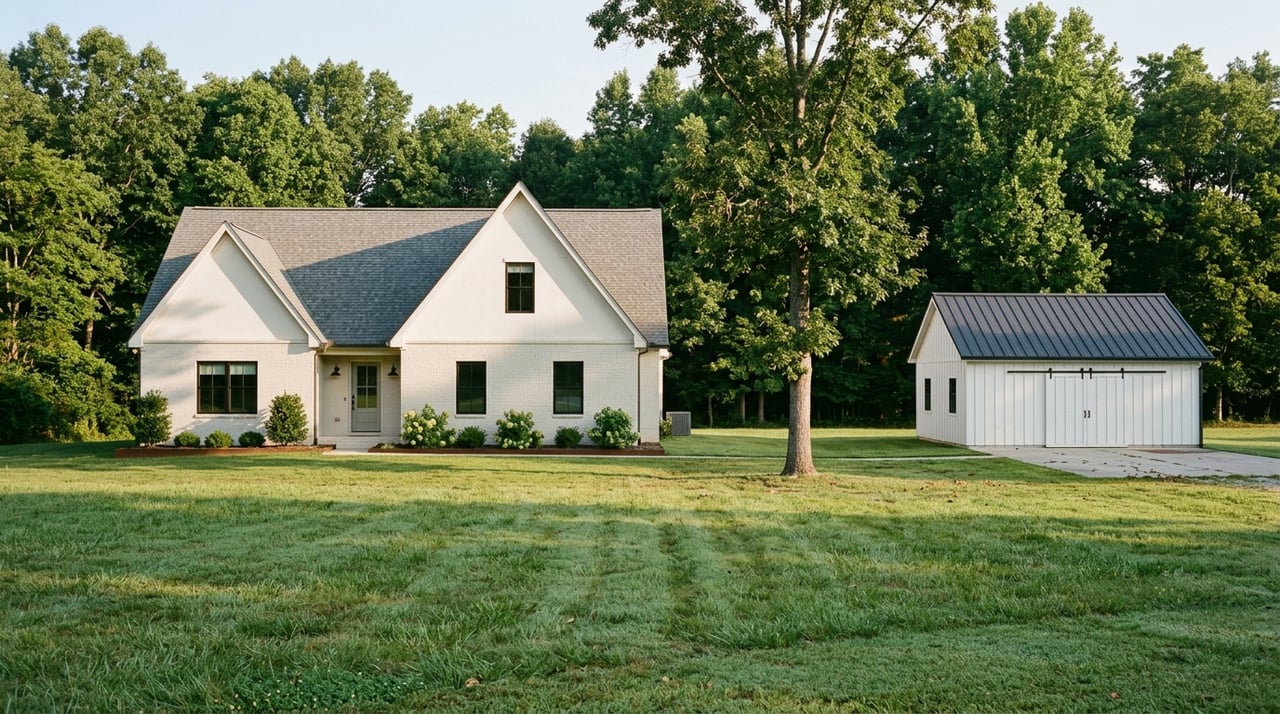
Detached sheds, barns, garages, and decks can be easy to overlook when you are focused on the main house. But on a rural property, these structures are part of the value and part of the maintenance picture.
The same moisture, drainage, and visibility issues that affect the home can affect outbuildings too. Look for rot, water intrusion, poor grading, insect damage, and signs that access or drainage around the structure has been neglected.
Budget beyond the general home inspection
One of the smartest ways to approach a Nelson County purchase is to treat the general home inspection as just one line item. Rural and mountain properties often require separate services and follow-up evaluations.
A practical budget should include the possibility of:
- General home inspection
- Septic inspection
- Well-water testing
- Well inspection, if needed
- Follow-up review for drainage, moisture, settlement, or access concerns
This approach helps you avoid being caught off guard later. It also gives you a clearer picture of the true condition of the property before you close.
A practical inspection mindset for buyers
If you are buying in Nelson County, it helps to think in layers. Start with the site, then the systems, then the structure.
Ask first whether the property depends on private well and septic service, whether the site drains properly, whether slopes look stable, whether access is reliable, and whether the parcel may sit in or near a flood-prone area. From there, you can evaluate the house itself with much better context.
This is where patient, local guidance matters. Rural properties can be wonderful places to live, but they reward buyers who ask detailed questions early.
If you are considering a mountain or rural home in Nelson County and want a clear, steady approach to the details, Katelyn Mancini can help you navigate the process with thoughtful local insight.
FAQs
Is a well inspection required for a Nelson County home sale?
- No. Virginia does not require a well inspection or well-water testing as part of a property transfer, though lenders or local governments may require it.
What should private well testing include for a Nelson County rural home?
- VDH recommends a baseline set of tests, plus bacteriological and radiological checks. Buyers may also want more than the lender minimum for a fuller picture of water quality.
Does a septic inspection guarantee a Nelson County septic system is in good condition?
- No. Virginia law does not require a pass or fail result, does not allow a hydraulic load test, and does not make the inspection a soil-suitability evaluation.
What should buyers check first on a Nelson County mountain property?
- Start with site drainage, slope, road access, floodplain status, and whether the property relies on private well and septic service.
Who handles well and septic questions in Nelson County, Virginia?
- The Blue Ridge Health District handles private well and septic work in Nelson County, and the Nelson County Health Department environmental health office is in Arrington.
Why is drainage such a big issue for Nelson County rural homes?
- Poor drainage can lead to moisture problems, mold, mildew, rot, and structural deterioration, especially on sloped sites where runoff can move quickly toward the house.