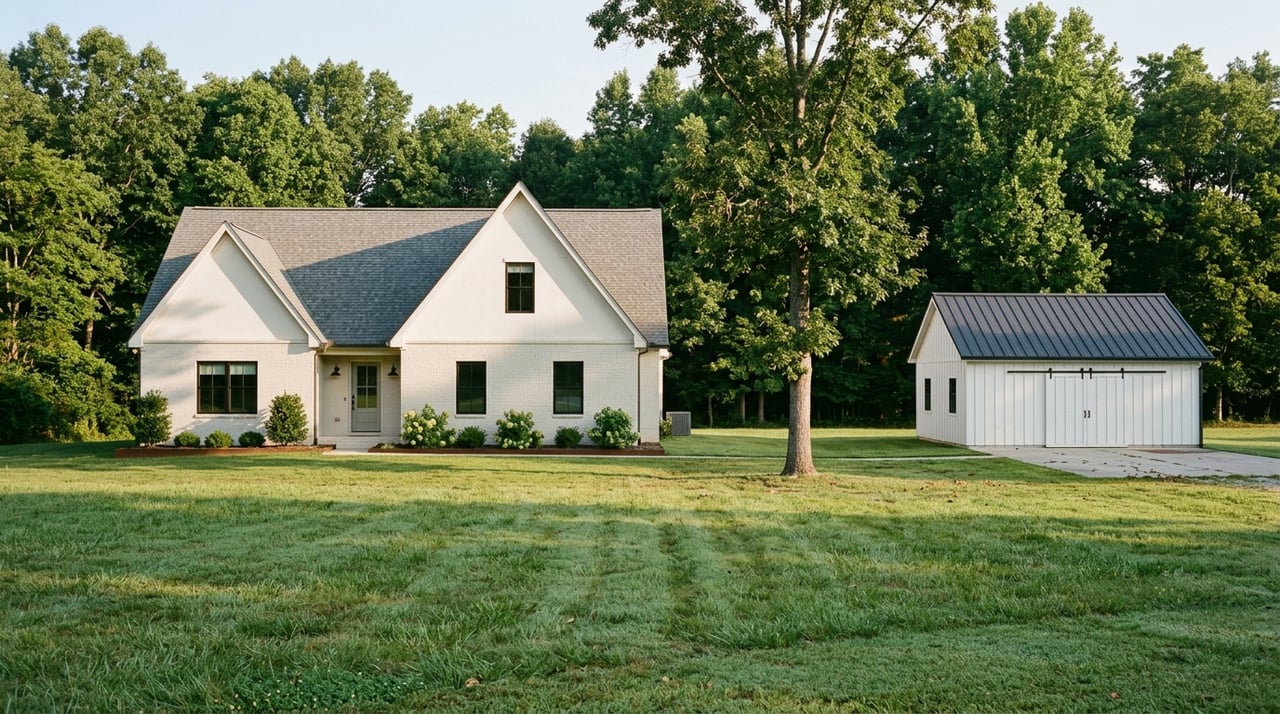
If you are dreaming about a few acres, a garden, maybe some animals, and room to breathe without feeling cut off from everyday services, Albemarle County probably keeps showing up on your list. That makes sense. This area offers a real rural land base near Charlottesville, but buying a small farm or homestead here also means paying close attention to zoning, development rights, utilities, and tax rules. If you want to know whether Albemarle fits your goals and what to check before you buy, this guide will help you sort through it. Let’s dive in.
Why Albemarle draws homestead buyers
Albemarle County stands out because it pairs rural acreage with access to Charlottesville-area services, recreation, and transportation. For many buyers, that balance is the biggest draw.
The County’s Comprehensive Plan directs most new development into Development Areas, which cover about 5% of the county’s land. The Rural Area is intended for agriculture, natural-resource protection, and some homes, which helps explain why Albemarle continues to appeal to buyers looking for open land and a more rural setting.
What the farm landscape looks like
Albemarle has a substantial agricultural footprint. In the 2022 Census of Agriculture, the county had 866 farms covering 167,583 acres, with an average farm size of 194 acres.
That average can sound large if you are looking for a smaller setup, but the size breakdown is more helpful. About 36% of farms were 10 to 49 acres, and 29% were 50 to 179 acres, which suggests there is meaningful overlap with the kind of acreage many homestead and hobby-farm buyers want.
The county also supports a mix of agricultural uses. The main production categories included forage and hay, grapes, apples, and corn, pointing to a local base for pasture, orchard, vineyard, and mixed-use rural properties.
When Albemarle is a good fit
Albemarle may be a strong match if you want:
- A rural property near Charlottesville
- Land for gardening, pasture, orchards, or small-scale agricultural use
- A long-term stewardship mindset
- A property where you can enjoy privacy and open space
- Access to local agricultural support and county services nearby
The county is especially appealing if you are comfortable treating your purchase like a land decision, not just a house decision. In rural properties, the details behind the parcel matter just as much as the home itself.
When Albemarle may be less ideal
Albemarle may be less suitable if your main goal is easy subdivision or frequent event-based income. The county’s rules in the Rural Areas are designed to preserve active farms and agricultural and forestal land, not to encourage broad residential development in rural locations.
That does not mean opportunity is off the table. It means you need to confirm what a specific parcel can support before you count on adding another dwelling, subdividing later, or hosting events as part of your income plan.
Rural Areas zoning matters
One of the biggest things to understand is the Rural Areas district, often called RA. The county says this district is designed to preserve active farms and some of the county’s best agricultural and forestal land.
In practical terms, that means the rules are shaped around protecting rural land uses. Residential development not tied to bona fide agricultural or forestal use is intended to go into urban areas, communities, and villages instead.
For you as a buyer, that means a parcel can be a great fit for homesteading while still having limits that surprise buyers who are thinking more like future developers. This is one reason parcel-level due diligence is so important in Albemarle.
Development rights can change your plans
If you are thinking about adding a second home, creating a family division, or subdividing in the future, ask about development rights right away. In Albemarle’s Rural Areas, these are theoretical dwelling and subdivision rights.
The county says that without a development right, the minimum lot size in RA is 21 acres. So even if a property looks large enough on paper, you should not assume you can split it or add another dwelling later.
This is one of the first questions I encourage acreage buyers to investigate. It can affect both your short-term use and your long-term flexibility.
Use-value taxes can help, but rules are specific
For some buyers, land-use taxation is part of the appeal of owning acreage. Albemarle’s Use-Value Tax Deferral Program can reduce taxes on qualifying land, but the standards are very specific.
For agricultural use, the county requires at least 5 cleared acres under qualified use and at least $1,000 in annual gross sales or value. Homesites, driveways, landscaped areas, and supporting non-agricultural structures do not count toward the qualified acreage.
The county also says horticulture can qualify on the same 5-acre minimum, forestry generally requires 20 acres, and open-space land must be at least 20 acres. If a qualified use ends, rollback taxes can be triggered for the previous five years, and the county requires revalidation of qualified activities every two years.
If a parcel is already enrolled, ask whether the current use is active and whether there is any rollback risk. That question can save you from an unpleasant surprise after closing.
Agricultural and Forestal Districts explained
You may also come across properties located in Agricultural and Forestal Districts. These are voluntary rural conservation areas for farmland, timber, and open space.
The county says these districts are typically 10-year commitments. It is also important to know that joining a district does not automatically qualify a property for use-value tax treatment.
In other words, conservation status and tax treatment are related topics, but they are not the same thing. Buyers should ask how both apply to the parcel they are considering.
By-right farm uses can be a plus
If your goal is true agricultural use, Albemarle offers some advantages. The county says agricultural operations and farm wineries, breweries, and distilleries are by-right uses in the Rural Areas.
The county also says production, harvesting, tasting, harvest-your-own activity, and direct sales can be permitted without a zoning clearance. That can make certain agricultural plans more straightforward than buyers expect.
Still, by-right does not mean unlimited. The exact use, traffic patterns, buildings, and site layout still matter.
Some uses need extra approvals
If you want to host events or build an income stream around agritourism, check the approval path early. Albemarle says events, agritourism, and some sales activities may require an Agricultural Operations Clearance or a Special Use Permit depending on parcel size and traffic.
The county is also clear that weddings, receptions, and event-space rentals are not allowed on agricultural operations without a Special Use Permit. Outdoor amplified music requires a clearance and must meet county noise limits.
For some buyers, that is a manageable process. For others, it may be a sign that another property or county would be a better fit.
Barns, sheds, and workshops need review
Many small-farm buyers picture the house first, then the land, and only later think about outbuildings. In Albemarle, it is smart to reverse that and ask early whether the property can support the barn, shed, workshop, or other structures you want.
The county says structures, event areas, parking, and portable toilets are subject to setback rules. Structures also may not be located in floodplain, stream buffers, or on slopes of 25% or greater.
Most construction requires a building permit. The county notes that tool sheds and playhouses under 256 square feet are exempt from the building-permit requirement, although zoning and health review may still apply where relevant.
Utilities and access deserve close attention
Two beautiful rural properties can feel very different once you look at access and infrastructure. Albemarle’s GIS data identifies parcels by ACSA jurisdictional area and by well and septic infrastructure, and the county notes that ACSA provides retail water and sewer where it has jurisdiction.
If a property is not served by public water or sewer, understanding the existing well and septic setup becomes a key part of your evaluation. If you hope to add a dwelling or divide land, septic suitability can become even more important.
Road access matters too. The county notes that all public roads are managed and maintained by VDOT, and for some rural-area subdivision or family division requests, the county wants proof that the road serving the property is adequate.
Home-based business rules apply
If you want your homestead to support a side business, such as an office-based operation or another approved home occupation, ask what is allowed before you buy. In Albemarle’s Rural Areas, a home occupation requires approval.
The county distinguishes between minor and major home occupations, including limits on customers, employees, signage, and vehicle storage. That means a workable plan depends on the details, not just the idea itself.
Local support adds real value
One reason Albemarle appeals to first-time and expanding growers is that it offers more than land alone. Virginia Cooperative Extension’s Albemarle County and Charlottesville office provides agriculture and natural-resources programming, livestock and pasture help, master gardener resources, and free soil-test sample kits.
That kind of local support can be incredibly helpful if you are building skills as you go. It also reinforces that Albemarle has an established agricultural culture, not just scattered rural listings.
A practical way to evaluate a property
When you tour a small farm or homestead candidate in Albemarle, it helps to use a simple checklist. Focus on the parcel’s real-world function, not just the view or the house.
Ask these questions:
- Is the parcel in the Rural Areas district?
- How many development rights does it have?
- Is the property enrolled in land-use taxation?
- Is there any rollback-tax risk?
- Is it in an Agricultural and Forestal District?
- What water and sewer setup serves the property?
- Is there a well and septic system, and does the parcel perk if future expansion is planned?
- Are the road access and driveway conditions workable?
- What farm or business uses are allowed by right?
- Would your planned events, sales activity, or home occupation need additional approval?
- Can the site support the outbuildings you want within setback, slope, and environmental limits?
These questions are where good rural buying decisions usually start. They help you move from a dream to a property that actually supports your goals.
So, is Albemarle right for you?
For many buyers, the answer is yes. Albemarle County is a strong candidate if you want acreage, a rural setting, and access to Charlottesville-area services, and if you are comfortable doing careful due diligence on zoning, development rights, septic and well, road access, and permit thresholds.
If your vision is a small farm, hobby farm, orchard property, or homestead with long-term value, Albemarle offers a lot to like. If your main goal is easy subdivision or event-driven income without county approvals, it may feel more restrictive than you want.
The key is matching the property to your actual plan. If you want experienced, patient guidance as you sort through acreage options in Albemarle and the Charlottesville area, Katelyn Mancini can help you evaluate the details and move forward with confidence.
FAQs
Is Albemarle County good for a small farm or homestead?
- Yes. Albemarle is often a strong fit if you want rural acreage near Charlottesville and are prepared to review zoning, development rights, utilities, and tax rules at the parcel level.
What are development rights in Albemarle County Rural Areas?
- Development rights are theoretical dwelling and subdivision rights. Without a development right, the county says the minimum lot size in RA is 21 acres.
Can land-use taxation reduce taxes on an Albemarle homestead?
- It can for qualifying land. For agricultural use, the county requires at least 5 cleared acres under qualified use and at least $1,000 in annual gross sales or value.
Can you host weddings or events on an Albemarle farm property?
- Not automatically. The county says weddings, receptions, and event-space rentals are not allowed on agricultural operations without a Special Use Permit.
Do small farm buildings need permits in Albemarle County?
- Usually yes. Most construction requires a building permit, although tool sheds and playhouses under 256 square feet are exempt from the building-permit requirement, subject to other reviews where applicable.
What should you check before buying acreage in Albemarle County?
- Confirm zoning, development rights, land-use tax status, rollback-tax risk, water and sewer or well and septic setup, road access, and whether your intended uses or structures need county approval.