Thinking about buying land in Louisa County’s 23093 area? The right parcel can offer privacy, flexibility, and long-term value, but one missed step can stall your plans or add unexpected costs. You want a simple path from dream lot to build-ready site. This guide gives you the key checks, local approvals, realistic timelines, and budget ranges you should know before you write an offer. Let’s dive in.
Start with zoning and maps
Begin by confirming what you can build and where on the lot. Pull the parcel in the county’s Online GIS and tax maps to review boundaries, zoning, and mapped layers like floodplain indicators. Note the tax parcel ID and any visible easements or water features.
Next, read the zoning rules in Chapter 86 of the county code. Louisa’s land development chapter integrates zoning and subdivision standards, including uses, minimum lot area, and setbacks. If you plan to divide land, the code explains when a split counts as a subdivision. Review Chapter 86 closely.
If anything is unclear, ask Planning and Zoning for a written zoning determination. The county offers a formal request process for this letter, which reduces guesswork about uses and lot-size minimums. According to the county’s FAQ, a written determination involves a $125 fee.
Subdivision basics
- Splitting into three or more lots typically triggers subdivision rules and often VDOT-standard road improvements.
- Smaller divisions may be possible without full subdivision review when frontage and minimum acreage rules are met, but health department and VDOT items are still separate.
- Always verify frontage and access. Lack of public road frontage or an unrecorded easement can be a showstopper.
Confirm septic feasibility early
For most rural lots, septic is the make-or-break item. In Virginia, the local health department issues onsite sewage permits based on field work by a licensed Onsite Soil Evaluator or engineer. Start by skimming the VDH Onsite Sewage and Water Program to see forms and contacts.
Use the free NRCS Web Soil Survey as an early screen. Mapped soils can hint at drainage limits or shallow bedrock. Pull your parcel in the Web Soil Survey and look for red flags, but remember that VDH needs a site-specific OSE evaluation. The mapped data is a guide, not an approval.
Book an OSE visit as part of your due diligence window. Ask for a written evaluation and a letter on likely system type. If you have signs of a high water table, hydric soils, or very shallow bedrock, plan for an alternative or engineered system that will increase costs and review time.
Plan your private well
Most Louisa landbuyers will drill a private well. The health department handles permits and requires bacteriological testing before use. Review the VDH Private Well Program for permit steps and recommended testing.
If there is an existing well, request any well logs, permits, and past test results from the seller or the local health department. For new wells, ask neighbors about typical depths and yields in the area and plan budget for drilling, pump, pressure tank, wiring, and any needed treatment.
Verify legal access and VDOT
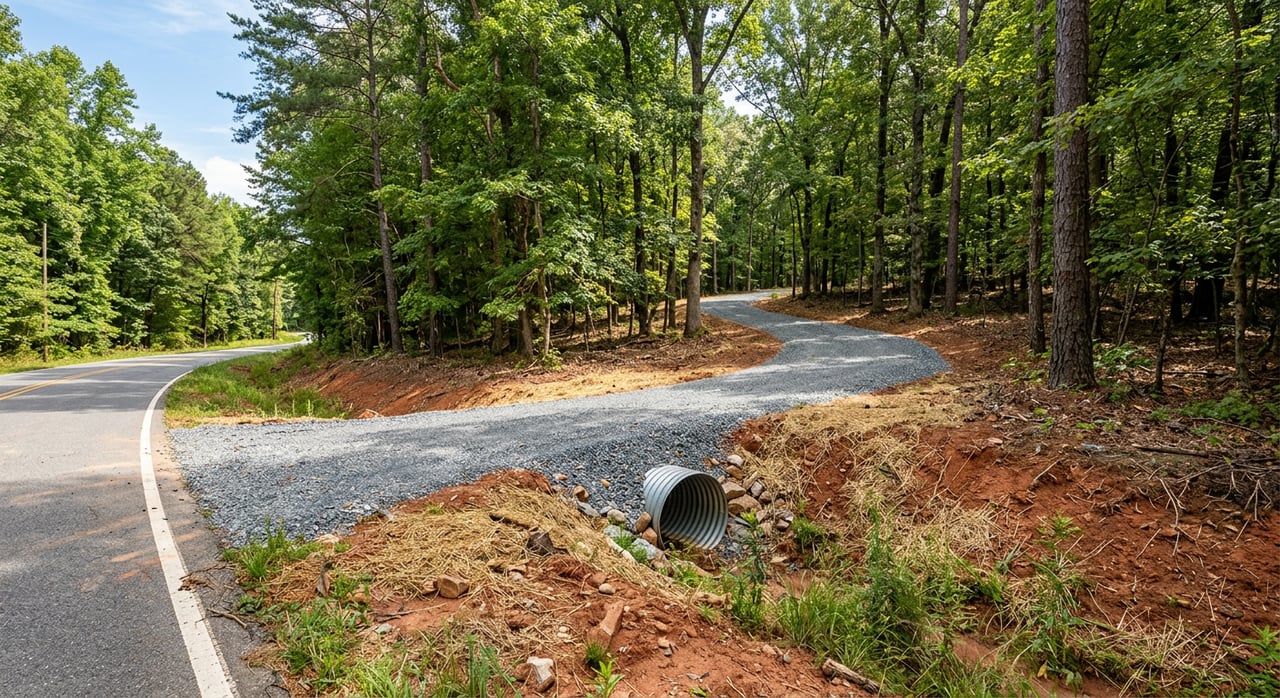
Confirm whether the parcel fronts a VDOT-maintained road or a private road. If your driveway connects to a state route, you will likely need an entrance or land-use permit. VDOT regulates sight distance, spacing, and culvert design. Read VDOT’s Access Management Regulations and contact the district residency office early.
If access is by private road, locate the recorded easement and any road maintenance agreement. When multiple parcels share a drive, a written, recorded agreement helps avoid disputes and lender issues. Lack of a recorded easement or inadequate sight distance along a state route are common red flags you want to identify before closing.
Check floodplain and wetlands
Look for floodplain or wetland indicators on county GIS and federal maps. If a mapped flood zone crosses the build area, you may face limits on building and septic placement. Wetlands can shrink the buildable footprint or require additional review. If indicators appear, line up a site-specific delineation and plan your house site and drainfield around protected areas.
Price power and broadband
Contact Dominion Energy early for a service estimate. Line extensions can take months and add significant cost if you are far from existing infrastructure. The utility’s tariff explains how extensions and customer contributions are handled. Review Dominion’s Virginia tariff to understand allowances and when a contribution may be required.
Broadband availability varies by road and hollow. Use county resources and FCC maps to confirm options at the parcel. Where fiber is not present, fixed wireless or satellite can bridge the gap for many lifestyle buyers.
Permits and a realistic timeline
Every property is unique, but most Louisa builds follow a similar order. Expect several items to run in parallel, and give yourself cushion for agency workloads and contractor backlogs.
Pre-purchase due diligence, 1 to 3 weeks
- Pull the parcel in Louisa’s GIS, confirm zoning in Chapter 86, and request a written zoning determination if needed via the county FAQ.
- Order a boundary survey if lines or access are uncertain.
- Screen soils on the NRCS Web Soil Survey and schedule an OSE site evaluation.
Health department approvals, 1 to 3 months
- Your OSE submits the soil evaluation to VDH for septic permitting. The local office also handles well permits and testing. Review the VDH onsite program for process and forms.
- Louisa notes that health department approvals can take 60 days or more during busy times, so plan ahead in your contract timeline.
VDOT entrance permit, weeks to a few months
- If your driveway ties into a state road, submit to VDOT for an entrance or land-use permit. See the Access Management Regulations for spacing and sight-distance standards.
County building and land-disturbing permits, 2 to 12 weeks
- Once core approvals are in hand, apply for building permits. If your land disturbance crosses key thresholds, you may need erosion and sediment control plans and a Responsible Land Disturber. Timelines vary with plan completeness and reviewer workload.
Construction and final inspections
- Build times vary widely based on design and builder schedule. Plan for septic and well finals, plus county final inspection and certificate of occupancy before move-in.
Budget: typical cost ranges
Numbers vary by site, depth, design, and contractor availability. Use these ranges to shape a working budget, then confirm with local quotes and your OSE’s report.
- Septic systems. Many conventional systems fall roughly in the 5,000 to 15,000 dollar range, while alternative or engineered systems can run higher. See this consumer summary on septic system costs for context, then rely on your OSE’s findings for a true estimate.
- Private wells. Drilling is typically priced per foot, and complete well systems commonly land in the low to mid five figures in Virginia depending on depth and geology. Industry compilations summarize recent drilling and system costs; here is one example of well drilling cost statistics.
- Driveway and VDOT entrance. A simple driveway cut may be modest, but required culverts or sight-distance work can add several thousand to tens of thousands. Check VDOT standards early.
- Electric service. Long extensions or underground service can add months and significant cost. Dominion’s tariff explains when customer contributions apply.
- Erosion and land-disturbing compliance. If your project triggers permits and controls, budget for plan design, fees, and installation. Penalties for skipping permits are steep, so plan ahead.
Quick Louisa buyer checklist
Use this simple sequence to stay organized when you evaluate land in the 23093 area.
- Look up the parcel in Louisa GIS. Save the tax parcel ID and zoning.
- Read Chapter 86. Confirm allowed uses, lot minimums, setbacks, and any division rules.
- Ask for a written zoning determination if needed via the county FAQ.
- Order a boundary survey if lines, acreage, or access are unclear.
- Pull soils on the NRCS Web Soil Survey and schedule an OSE visit for a site evaluation.
- Start health department steps for septic and well with the VDH onsite program and VDH private wells.
- Contact VDOT about an entrance and review the Access Management Regulations.
- Ask Dominion for a line-extension estimate and timeline using the tariff to understand allowances.
- Build 2 to 3 months of cushion for VDH and 1 to 3 months for VDOT and utilities in your project plan.
Work with a local land advisor
Buying land is exciting, but the path to a build-ready lot in Louisa is technical. With the right plan and local help, you can move from due diligence to permits with confidence. If you want a second set of eyes on a parcel, guidance on OSEs and builders, or a step-by-step plan that fits your goals and timeline, reach out to Katelyn Mancini. She represents buyers across Central Virginia and brings calm, detailed guidance to rural and acreage purchases.
FAQs
How do I verify zoning for a Louisa parcel?
- Start with the county’s Online GIS and tax maps, then confirm rules in Chapter 86 and request a written zoning determination via the county FAQ for certainty.
What is the key septic step before I buy land in 23093?
- Schedule a licensed OSE for an on-site soil evaluation and use the VDH onsite program to submit for a septic permit; use the Web Soil Survey only as a preliminary screen.
Who issues private well permits in Louisa County?
- The local office of the Virginia Department of Health issues well construction permits and requires testing; see the VDH Private Well Program.
Do I need a VDOT permit for my driveway in Louisa?
- If your entrance connects to a VDOT-maintained road, you typically need a VDOT entrance or land-use permit; review the Access Management Regulations and contact the local residency office.
How long do health department approvals take for septic and well?
- Louisa notes VDH approvals can take 60 days or more during busy periods; plan for 1 to 3 months for septic and well permitting alongside your other due diligence using the county FAQ as a timing reference.
What should I budget for a septic system and well?
- Many conventional septic systems run roughly 5,000 to 15,000 dollars per recent summaries, and complete well systems often land in the low to mid five figures per industry statistics; get local quotes after your OSE report.